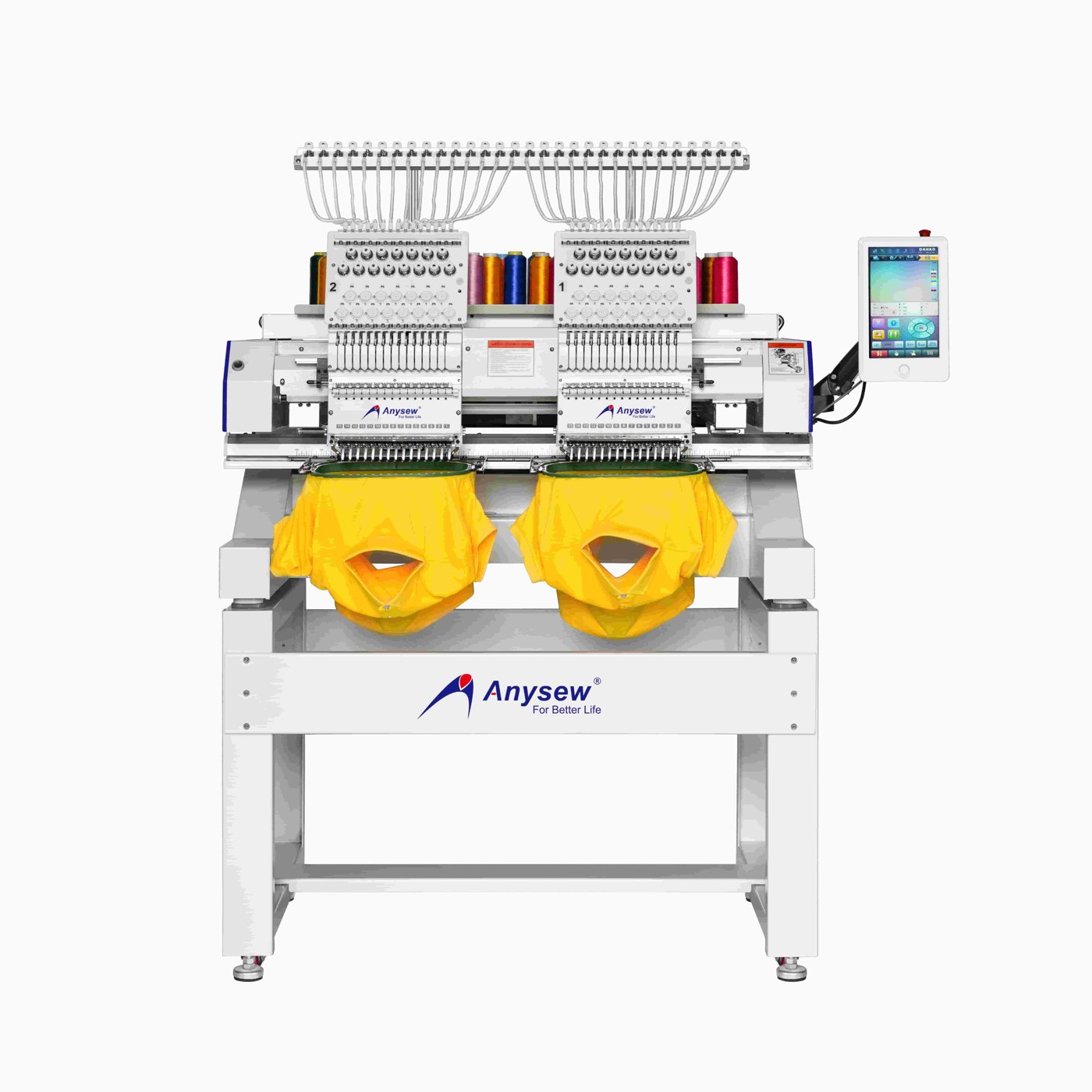
What Computerization Changes
On a mechanical or cam-driven embroidery machine, the pattern is fixed by hardware: discs, cams or a pantograph setting determine where each stitch lands. Changing the design means changing or re-setting that hardware, and identical output depends on the operator's skill in re-aligning it.
A computerized machine stores the pattern as a file. The control system reads the stitch coordinates and commands the X and Y axes to move the frame while the needle and thread systems operate in sequence. Two practical consequences follow:
- Repeatability. Once a design is loaded and the start position is set, every subsequent run follows the same coordinate sequence. Output does not drift with operator fatigue or re-setting.
- Pattern changeover. Moving to a different design is a file selection, not a mechanical rebuild. Short runs and mixed orders become practical.
The Computerized Workflow
Design Files and Input
Computerized embroidery machines work from stitch files. The two formats named for this machine family are DST and DSB. Designs are prepared on embroidery software, converted to the required format, and then transferred to the machine.
Two transfer routes are supported: USB input for loading files from removable media, and direct transmission from a PC via LAN, which allows designs to be sent to the machine over a network connection rather than carried on a stick.
Memory and Power-Loss Protection
The control system holds 100 million stitches or 400 design patterns in memory, so a working library of designs can sit on the machine without repeated loading. Automatic memory retention after power loss preserves the stored designs and the machine's position in the current pattern when power is interrupted, which matters in environments with unstable supply.
The Operator Interface
The machine is operated through a 10-inch HD true-color LCD touch screen. The interface is available in 13 languages, which simplifies training where operators work in more than one language or where the machine changes hands between shifts.
Thread Control
Two functions reduce manual supervision during a run:
- Automatic thread trimmer cuts thread at the end of a color block or pattern segment without operator intervention.
- Thread break detection stops the machine when a thread breaks or runs out, so the operator can mend the stitch position rather than discover a long unstitched section at the end of the run.
Motion and Safety
The machine uses a servo motor rated 150 W, with DC36V micro-step motors driving the X and Y axes. Micro-step drive gives finer positional resolution on the frame movement, which supports stitch placement accuracy. An emergency stop button is provided for immediate shutdown.
Where This Machine Fits
The computerized family is anchored on the AS-BC1202 Double Head Embroidery Machine, a double-head configuration. The full specification for the AS-BC1202 is confirmed in the table on its model page — buyers should read that table rather than rely on general descriptions, because head count, field size and compatible attachments determine what a given machine can actually produce.
If the intended work is finished caps rather than flat goods, review the Cap Embroidery Machines category, which covers the machine type and the attachments involved. Buyers new to that segment should also read Cap Embroidery Machines: What to Check Before Buying, which sets out the checks that matter before committing to an order.
Buyer Checklist
Use the following list to structure an enquiry. Each point should be confirmed in writing on the quotation, since configurations differ between orders.
- Intended product: flat goods, finished caps, or both. This determines the machine type and the attachments required.
- Design files: confirm the formats you will supply (DST, DSB) and whether your software output is compatible.
- Transfer method: state whether you need USB input, LAN transmission from a PC, or both.
- Memory requirement: confirm that the stored pattern capacity suits your design library and order mix.
- Power stability: if supply is unreliable, confirm the power-loss retention behavior for your configuration.
- Language: confirm the interface language required for your operators.
- Thread control: confirm that automatic trimming and thread break detection are included in the quoted configuration.
- Head count and field size: confirm these against your typical order size and artwork dimensions.
- Site conditions: confirm voltage, floor space and any installation requirements; installation and debugging support is part of the service scope.
- Spare parts: confirm the consumable and wear parts you will need and how they are supplied.
- Documentation: Certificates available upon request.
- Commercial terms: MOQ and lead time are confirmed on quotation.
Requesting a Quotation
To receive an accurate quotation, send your intended product type, the design formats you work in, your typical order size and the site conditions where the machine will run. Specifications and commercial terms are confirmed on quotation rather than assumed from a general page. Please use the contact page to send your requirements and request a quotation.