What a Lockstitch Machine Does
The lockstitch is a flat, balanced stitch that holds well under tension and unravels only when cut. It suits straight seams, topstitching, edge finishing and assembly work across woven and many non-woven materials. Because performance depends heavily on how the fabric is fed and how the machine is driven, ANYSEW organizes its lockstitch range along those two axes.
How the ANYSEW Lockstitch Family Is Organized
- By feed system: standard feed arrangements for general work, needle feed for slippery or layered materials, walking foot for heavy and uneven surfaces, and differential feed for stretch and gathering control.
- By drive: direct-drive and step-motor configurations for responsive control and reduced mechanical wear.
Explore the full range under Single Needle Lockstitch Sewing Machines, or browse focused categories such as Needle Feed Lockstitch Machines, Differential Feed Lockstitch Machines and Lockstitch Machines with Edge Cutter.
Models in the Lockstitch Range
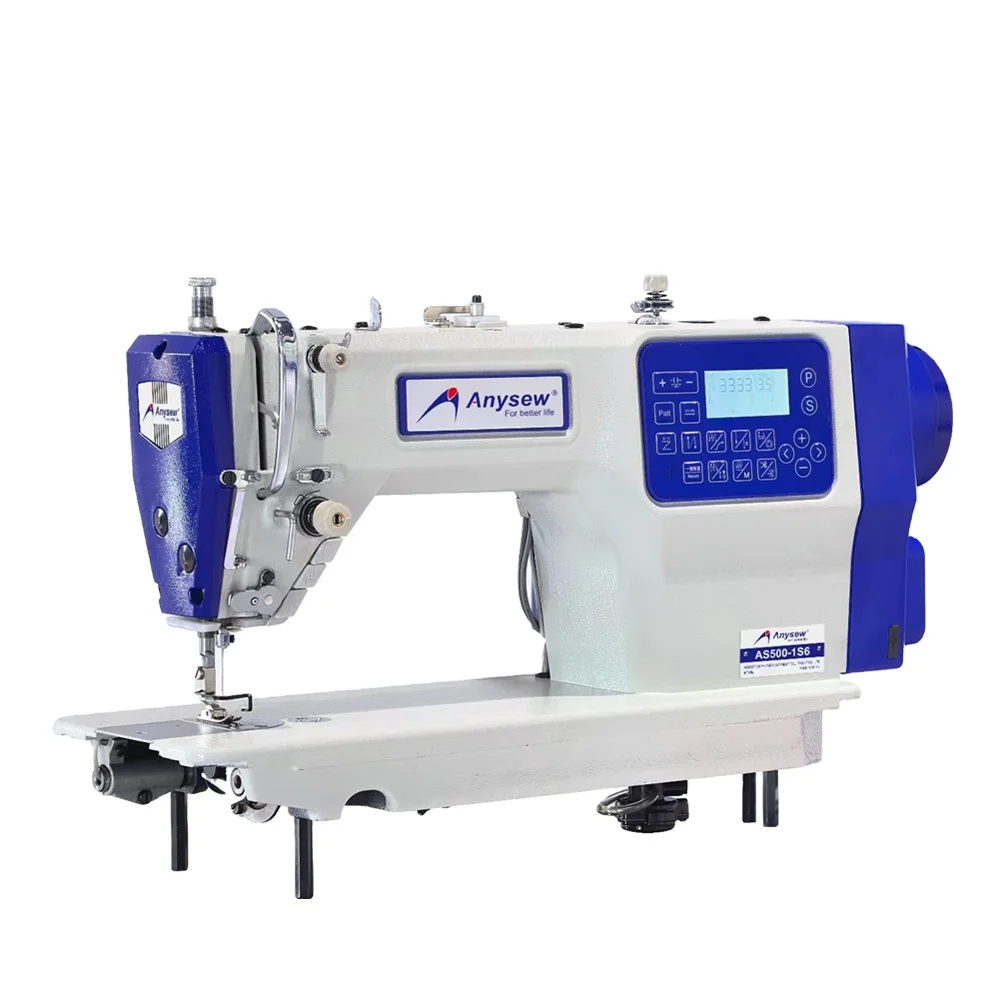
- The AS500-1S6 Direct Drive Lockstitch Machine is a direct-drive single-needle option for general assembly.
- The AS777EC-1S is a lockstitch model suited to edge-cutting operations.
- The AS5492-1ST-OF is a bottom differential feed lockstitch.
- The AS0303DDI-4 Walking Foot Lockstitch Machine handles heavy, layered and uneven materials.
- The AS202 Heavy Duty Lockstitch Sewing Machine is built for demanding thick-fabric work.
Further named models in the family include the AS5492-1S-X-FOF (top and bottom differential feed, 1 step motor), AS777DDI-4 (direct-drive, edge cutter), AS5820DN-4 and AS7903DN-4 (direct-drive needle feeding), and AS7906-2S (needle feed, 2 step motors). Detailed specifications are confirmed on quotation.
Choosing by Fabric Weight and Seam Operation
- Light to medium fabrics: a drop-feed direct-drive single-needle machine supports fast, accurate straight seams.
- Slippery, layered or matched patterns: needle feed keeps plies aligned.
- Heavy, thick or uneven materials: a walking foot machine maintains consistent feeding.
- Stretch or gathering work: differential feed controls stretch and pucker.
- Edge finishing in one pass: an edge-cutter model trims as it sews.
Buyer Checklist
- Confirm fabric type, weight and maximum layer count.
- Define the seam operation: straight, topstitch, edge trim or gathering.
- Decide on feed system and drive type.
- Confirm power supply and workspace constraints.
- Request the specification sheet and confirm details on quotation.
To discuss your requirements, request a quotation through our contact page.