The role of the cutting room
Cutting sits between fabric spreading and sewing. The sequence is straightforward but unforgiving: fabric is spread in layers to the required depth, the marker is placed or projected, the cutting machine follows the outline, and each cut piece is numbered so it can be bundled and matched back to its layer and size. Errors at this stage are expensive because they multiply across every layer in the spread.
Three practical points follow from that workflow:
- Cutting height must match the spread depth, not exceed it.
- Blade length and stroke determine how cleanly thick spreads are separated.
- Numbering discipline keeps bundles traceable through sewing and finishing.
Featured model: CZD-708D
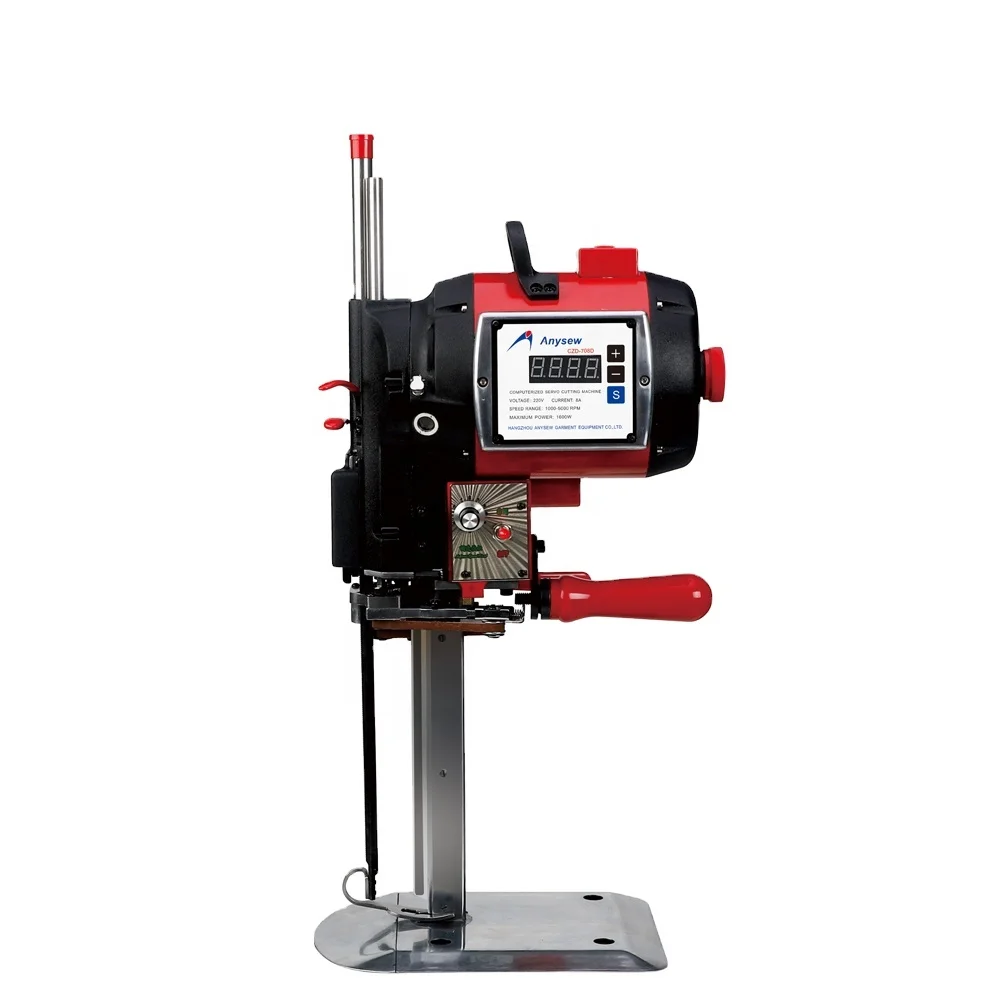
The reference model for this category is the CZD-708D Straight Knife Cutting Machine, a computerized servo cloth cutting machine of the Eastman type. Its headline facts:
| Feature | Detail |
|---|---|
| Power | 1600 W |
| Cutting heights | 110–285 mm |
| Blade sizes | 8 to 13 inches |
| Sharpening | Automatic |
The 110–285 mm height range covers shallow sample spreads through to deep production spreads, while the 8 to 13 inch blade options let a buyer match blade length to the thickest material in the cutting plan. Automatic sharpening keeps the blade edge consistent across a long shift, which matters for clean edges on layered fabric. The servo drive is the basis of the computerized control described in the model name.
Choosing the right configuration
Selection starts with the material and the spread, not with the machine. Buyers should establish the maximum spread height, the heaviest and densest fabric in the range, the tightest curve radius in typical markers, and whether the cutting room runs one shift or continuous production. Those answers point to a blade size and a power class.
For a structured comparison of machine types and cutting methods, read our Fabric Cutting Machines: Buyer Selection Guide. It sets out how straight knife, round knife and other cutting approaches differ in daily use.
Further cutting configurations beyond the featured model are confirmed on quotation rather than published as a fixed catalogue. Share your spread heights, materials and marker complexity with us and the matching configuration is quoted against your actual production plan.
Buyer checklist
Before requesting a cloth cutting machine quotation, confirm:
- Maximum and minimum spread height in millimetres
- Fabric types and the heaviest material to be cut
- Required blade size range
- Power supply available in the cutting room
- Whether automatic sharpening is required
- Spare blade and wear-part requirements
- Any installation, debugging or training support needed
Request a quotation
Send your cutting room requirements through our contact page and we will respond with a configuration and price confirmed on quotation, together with spare parts supply and logistics options.